If you’re eager to explore Bali’s cultural depth through its garments, fabrics, and traditions, a Ceremonial Clothing Tour in Bali by Car offers a unique, immersive way to experience local heritage. With a private driver at your side, you’ll visit traditional markets, artisan workshops, and sacred sites — all while discovering the meaning behind Bali’s ceremonial attire and even trying it on yourself. As a Bali travel expert, I believe combining culture, comfort, and convenience creates unforgettable memories. Whether you want to understand Balinese customs or simply admire traditional garments — this tour delivers a rich, respectful, and authentic experience.
For a seamless and tailored journey, consider booking through a Bali private tour service — offering reliable Bali car hire with driver, curated routes, and local insight that transforms your visit into more than just sightseeing.
Why a Ceremonial Clothing Tour in Bali by Car Makes Sense
Table of Contents
ToggleExploring Bali’s traditional garments and cultural dress is more than shopping — it’s about understanding identity, ritual, and everyday spirituality. Doing so with a private car charter brings distinct advantages:
-
Ease and comfort — With “Bali car hire with driver,” you avoid the stress of navigating narrow village roads, finding parking, or coordinating public transport. You move from markets to workshops to temples smoothly and comfortably.
-
Flexibility and personalization — You control the pace and itinerary. Want to spend more time browsing fabrics or chatting with artisans? No problem. Prefer to drop by a temple to see attire in ritual use? Easy to adjust. This flexibility turns a typical “Bali day trip” into a meaningful cultural journey.
-
Local knowledge and respectful guidance — A good driver/guide can tell you which villages or markets are best for authentic garments, where to find quality woven fabrics or ceremonial sarongs (kamen), and how to behave respectfully when dressing up or visiting sacred sites.
-
Cultural immersion beyond souvenirs — Instead of mass-produced items, you get access to handcrafted attire, traditional weaving and sewing, and learn about the cultural significance behind every cloth pattern or color — often rooted in centuries of tradition.
If you aim for authenticity, comfort, and respectful engagement with local culture, a Ceremonial Clothing Tour in Bali by Car is a smart and rewarding choice.
What Is “Ceremonial Clothing” in Bali — Key Attire and Their Meanings
To appreciate this tour, it helps to understand what “ceremonial clothing” in Bali typically involves, and how local customs use it.
-
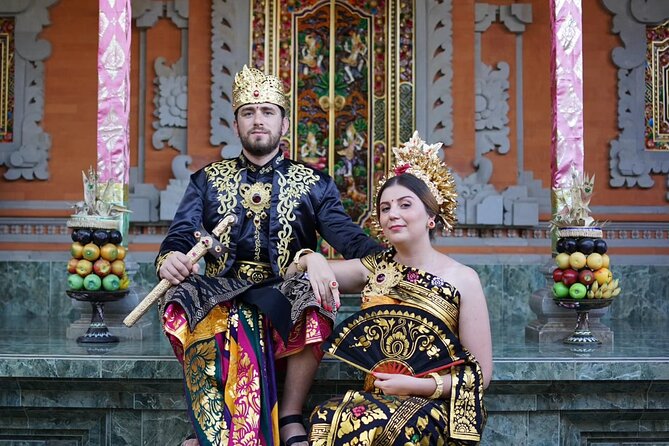
Sarong (kamen or kain) — A long piece of cloth wrapped around the waist, used by both men and women when entering temples or attending rituals. A proper ceremonial sarong is modest and extends below the knees. Ubud Villas Rental
-
Sash (selendang) — A belt tied over the sarong to secure it and as a symbol of respect. It is considered essential when attending ceremonies or sacred sites. Karanabali
-
Kebaya (for women) — A lace or light-fabric blouse often worn over the sarong and sash during ceremonies or important events; sometimes paired with the traditional sarong. Ubud Villas Rental
-
Udeng (for men) — A traditional headcloth or headband worn by Balinese men during ceremonies or temple visits — symbolizing clarity of mind and readiness for spiritual activities. Ubud Villas Rental
Wearing these garments properly is not just about aesthetics — it shows respect for Balinese spirituality and community customs. Bali Gate Tours
Many temples provide sarong and sash rentals for visitors, but having your own — bought through local artisans or markets — gives flexibility especially if you plan multiple temple visits. Ubud Villas Rental
What a Ceremonial Clothing Tour Looks Like: Markets, Workshops, Temples
A well-designed Ceremonial Clothing Tour in Bali by Car blends shopping for traditional attire, artisan visits, and cultural immersion. Here’s what you can expect:
Traditional Markets & Textile Hubs
-
Markets like in Klungkung (e.g. Pasar Endek Klungkung) are renowned for genuine woven fabrics, sarongs (kamen), and traditional cloth — often used for ceremonial clothing. indonesiapusaka.com –
-
Crafty markets and stalls around villages or towns like Ubud or Sukawati offer a variety of batik, hand-woven fabrics, sarongs, and spiritual wearables — often at prices more affordable than resort boutiques. Plan It Trips
Visiting in a private car means you’re free to browse at your own pace, compare fabrics and craftsmanship, and pick items for ceremony, temple visits, or souvenirs.
Artisan Workshops & Tailoring Houses
Behind many traditional garments are local artisans who weave, dye, sew, and finish them by hand. A tour can include:
-
Visits to weaving or textile workshops — observe or learn about dyeing, hand-loom weaving, batik, or traditional cloth production.
-
Tailored fittings: Some tailors or workshops offer alterations or custom ceremonial outfits — ideal if you want well-fitting sarongs, kebaya, or udeng made just for you (especially helpful if you plan repeated temple visits or want a keepsake).
-
Insight into craftsmanship: Learn how patterns, colors, and fabric choices reflect local beliefs, social symbolism, and ceremony requirements.
Temple or Sacred Site Visits — Experience Clothing in Context
Wearing ceremonial attire at a temple or sacred site elevates the experience — you don’t just observe; you participate respectfully. With proper dress (sarong + sash, modest top), you can:
-
Enter temple courtyards, attend a ceremony, or simply walk around the grounds with dignity and respect. Karanabali
-
Understand how locals use clothing — both symbolic and practical. It’s part of the culture: spiritual modesty, tradition, and reverence.
-
Combine cultural dress with temple architecture, rituals, and the ambiance of spiritual Bali — a holistic cultural immersion not just a photoshoot.
Taking a Ceremonial Clothing Tour in Bali by Car allows you to explore all these aspects in a seamless flow — from market to temple, from cloth to culture.
Sample Itinerary: Ceremonial Clothing Tour in Bali by Car
Here is an example of how a full-day tour might unfold, combining clothing discovery with cultural experience — perfect for travelers who value comfort, insight, and flexibility:
-
08:00 AM — Pickup from your hotel/villa (Seminyak, Denpasar, Ubud, etc.) with a private, air-conditioned car and English-speaking driver.
-
09:00 AM — Head to a traditional textile market — such as Pasar Endek Klungkung — browse sarongs, ceremonial fabrics, and learn about Endek weaving.
-
10:30 AM — Visit a local artisan workshop or tailor — observe weaving, cloth dyeing or sewing, possibly order a custom sarong/kebaya/udeng if you prefer.
-
12:00 PM — Lunch at a nearby warung or village restaurant — enjoy local food, take a break from the markets, and ask driver for a quiet, authentic place.
-
01:30 PM — Drive to a temple or sacred site — dress in your newly bought/ rented ceremonial attire (sarong + sash + modest top), get dressed with guidance if needed.
-
02:00 PM — Explore temple grounds, observe rituals or daily offerings (depending on timing), learn about the meaning of traditional clothing, temple etiquette, and spiritual context.
-
04:00 PM — Optional: visit a nearby art village or craft center to combine clothing tradition with broader Balinese culture — masks, wood carvings, batik, ritual items.
-
05:30 PM — Scenic return drive; perhaps stop for sunset photos or quiet village walk to reflect on the day’s cultural experiences.
-
07:00 PM — Drop-off at your accommodation — with new clothes, photos, and a deeper understanding of Bali beyond tourist spots.
This itinerary blends convenience, culture, craftsmanship, and context — all made smoother with a reliable private driver rather than juggling multiple transport options or crowded shuttles.
Practical Tips & Local Insights for a Respectful and Rewarding Tour
To make the most of your Ceremonial Clothing Tour in Bali by Car, and to be a respectful visitor, consider the following insights and tips:
-
Dress modestly and appropriately: When visiting temples or sacred sites — wear sarong, sash, and cover shoulders. While you can rent sarong at some temples, owning your own is smart if you plan multiple visits. Bali Gate Tours
-
Choose authentic clothing and avoid cheap tourist versions: Look for fabrics like woven Endek, hand-loomed sarongs, or properly made kebaya and udeng — not just beach sarongs. Markets like Pasar Endek Klungkung or artisan workshops often have these. indonesiapusaka.com
-
Be respectful at temples and sacred sites: Dress code, calm demeanour, avoiding disturbances to rituals or offerings is essential. Karanabali
-
Take your time and be curious: Talk with artisans, ask about patterns’ meanings, fabric techniques, local customs. That transforms your purchases into meaningful souvenirs — stories rather than trinkets.
-
Support local artisans directly: Buying from workshops or village markets helps sustain traditional crafts and supports communities. This is more ethical than buying mass-produced “tourist souvenirs”.
-
Combine clothing with cultural context: Wearing ceremonial clothing while visiting temples or cultural sites enhances respect and gives you a deeper appreciation of Bali’s spiritual life.
Real Travel Example: A Memorable Ceremonial Clothing Day in Bali
Recently, a couple I helped plan a tour for stayed near Ubud. Early morning, their driver picked them up and drove them to a lesser-known woven-fabric market near Klungkung. The market was peaceful, vendors friendly — they bought a hand-woven sarong (kamen) and a colorful sash directly from a local weaving family.
Next, they visited a small artisan tailor where they tried on traditional clothes: the husband got a simple udeng (headcloth) and proper ceremonial sarong; the wife tried a kebaya blouse paired with her sarong. The tailor helped them dress correctly, explaining customs for temple visits.
After lunch at a local warung, they drove to a regional temple. Wearing their new ceremonial clothing, they walked calmly through temple courtyards, observed daily offerings, and felt the serenity of the place — not as tourists, but as respectful guests. Locals nodded back with acknowledgment, welcoming them to observe sacred space.
In the evening, during the drive back, the couple said the day felt “real and respectful” — not a simple shopping spree, but a meaningful cultural immersion. They planned to wear their clothes for future temple visits and share the story behind each piece with friends back home.
That’s the kind of experience a Ceremonial Clothing Tour in Bali by Car can offer: clothes with soul, memories with respect, and an authentic glimpse into Balinese tradition.
Why A Bali Tour Package with Private Driver Is Better Than DIY for This Tour
While it’s possible to self-organize — using public transport, taxis, or tuk-tuk rides — a dedicated Bali tour package with a trusted driver makes a huge difference when you aim for depth, comfort, and flexibility:
-
You get door-to-door transport — from your hotel to markets, workshops, temples, and back. No waiting for taxis or juggling connections.
-
Your driver often doubles as local cultural guide — helping you find authentic markets/workshops, advising on proper attire, telling local stories, and helping with dress code as needed.
-
The schedule stays flexible and relaxed — you choose where to go, how long to stay, when to pause; you’re not bound by fixed group tour timings.
-
It becomes a safe, organized way to explore — especially if you’re unfamiliar with local norms, language, or locations; having a local driver removes stress and ensures respect.
For visitors who care about authenticity — not just souvenirs — but about culture, comfort, and meaningful engagement — a “Ceremonial Clothing Tour in Bali by Car” organized through a trusted tour service is definitely the best bet.
Conclusion
If you want your Bali trip to go beyond beaches and typical sightseeing — to include spirituality, tradition, craftsmanship, and real cultural immersion — a Ceremonial Clothing Tour in Bali by Car is a wonderful choice. With a Bali car hire with driver, you get comfort, flexibility, and local insight. You explore markets, artisan workshops, sacred sites — all while learning, respecting, and connecting.
Ready to try on a sarong, sip incense-scented temple air, and wear the spirit of Bali on your sleeves (or waist)? Book your Bali private tour or car charter with a local driver today. Embrace culture, tradition, and a journey you’ll remember long after you return home.