The Art of Offerings in Balinese Rituals


Description:
Discover the rich “The Art of Offerings in Balinese Rituals” — from canang sari to temple gebogan, and how a Bali car charter with driver enhances your cultural journey.
Welcome to an insightful look at The Art of Offerings in Balinese Rituals, a deeply meaningful tradition that touches nearly every part of daily life in Bali. Whether you’re exploring Bali’s temples and villages or booking a customized car hire with driver in Bali through a reliable Bali private tour service, understanding these offerings adds a whole new layer to your experience. In this article, we’ll explore their origins, meanings, variations, and how you can respectfully engage with them on your spiritual-cultural tour.
Why Offerings Matter in Balinese Culture
The Spiritual Framework
In Balinese Hinduism, the concept of offering (locally called banten or sesajen) is central to maintaining a balance between humans, nature and the divine.
As one travel guide puts it:
“The Balinese provide offerings to help maintain balance between the Hindu Gods and the spiritual realm and the mortal realm of people.”
Thus, each humble tray of flowers, incense and rice is not just decoration—it’s a spiritual act, a token of gratitude, a ritual tool and a symbol of harmony.
Everyday Life Embedded in Ritual
Offerings are not reserved only for major ceremonies; you’ll see them outside homes, shops, temples and even on pavements each day. In fact:
“These small crafted coconut-leaf baskets are filled with flowers, rice, and symbolic objects. Offerings are placed at temples and other sacred places as expressions of gratitude and devotion to the gods.” mytravelindonesia.com
When you book a full-day trip with a driver/charter, you’ll have the flexibility to pause and observe these small offerings in various settings—market stalls, village streets, roadside fronts—allowing you to witness how ritual permeates ordinary life.
Why a Car Charter with Driver Elevates the Experience
Using a Bali daily tour packages provider with a dedicated vehicle and driver means you aren’t locked into a rigid schedule or tourist-bus path. With your own car and driver you can:
-
Stop off at a village workshop where offerings are made.
-
Time your visits so you arrive near temples when offerings are being prepared or placed.
-
Avoid crowds and choose quieter vantage points, giving you space to appreciate the artistry and meaning of each offering.
When you book via a reliable partner like Bali private tour service you ensure your driver understands not just the roads, but the culture—and can guide respectfully.
Types of Offerings & Their Meanings
Canang Sari – Daily Gratitude Baskets
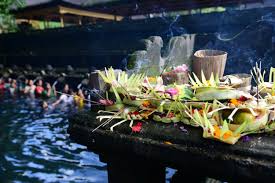
One of the most visible and constant types of offering is canang sari. These are small trays woven from palm or coconut leaf, filled with flowers, rice, sometimes a coin or snack, and often set down outside homes or businesses each morning. Wikipedia
Key aspects:
-
They serve as daily gratitude offerings—for life, protection, harmony. Balitri
-
The colours and directions of flowers correlate with particular deities: white flowers point east for Iswara, red to the south for Brahma, yellow to the west for Mahadeva, blue/green to the north for Vishnu. Wikipedia
-
A travel tip: When you’re touring with a driver/charter, keep an eye out for canang sari on the ground—avoid stepping on them, especially if incense is still burning, as this is considered disrespectful. A Little Adrift Travel Blog
Gebogan & Banten Tegeh – Ceremony-Scale Offerings
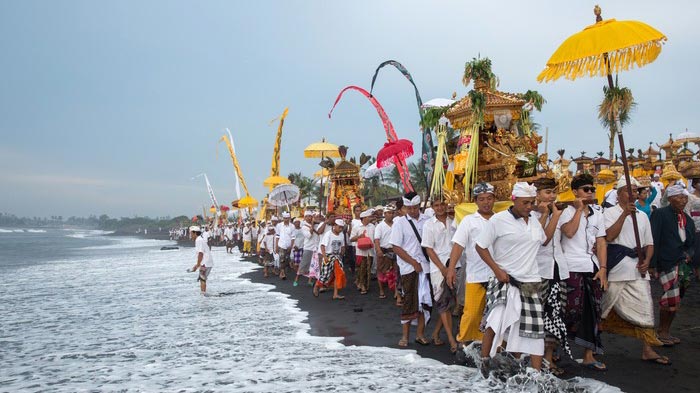
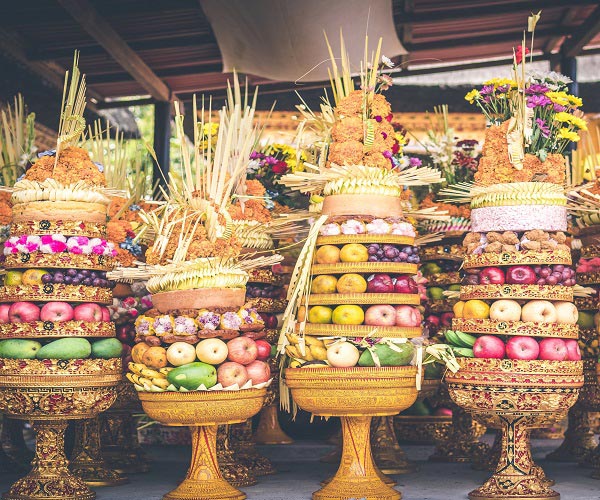
On ceremonial occasions, you’ll find much larger and more elaborate offerings. Examples include gebogan (towers of fruit, cakes or food items) and banten tegeh (stacked food offerings) that may rise several metres high.
Features:
-
These are prepared for temple anniversaries (“odalan”), village festivals or important calendar days.
-
They often involve community participation—women weaving baskets, families contributing fruit, special dress, processions.
Travel example: On a chartered car tour you could plan to arrive at a village where a gebogan procession is scheduled, witness the preparation and then the offering placement—creating a richer cultural narrative behind your stop.
Offerings & Rituals in Context
Offerings are woven into many other rituals: purification ceremonies (such as Melukat), house inaugurations (melaspas), temple celebrations, annual festivals.
For example: The Melukat purification ritual uses offerings to cleanse a person’s mind, body, and spirit, often in conjunction with spring water or river bathing. Wikipedia
When your driver knows about these ritual calendars, you might time a temple visit accordingly—witnessing not just the site but the offering ritual as part of its spiritual flow.
How to Experience Offerings Mindfully on a Tour
Plan Your Day with Flexibility & Depth
Here’s a sample itinerary using a car charter with driver, focused on the art of offerings:
-
08 :00 – Pickup at hotel in South Bali. Brief your driver that you’d like some time to observe offering-preparation and quiet temple offering moments.
-
09 :30 – Visit a local market where fresh flowers, palm leaves, and offering materials are being sold; observe or ask to see the weaving process.
-
11 :00 – Arrive at a temple when daily offerings (canang sari) are being placed; take a moment of respectful observation, ask the driver about their meaning.
-
13 :00 – Lunch in a village warung; the driver explains how daily life includes offerings at home, business, street.
-
14 :30 – Proceed to a village festival or temple-anniversary site where you may see gebogan or banten tegeh being carried.
-
16 :00 – Drive to a scenic viewpoint for sunset; reflect on the day’s offering observations.
-
18 :00 – Return to hotel. Drop-off and optional stop at a craft shop where local women make offering baskets for visitors (and you can pick up souvenirs made with meaning).
Ask the Right Questions to Your Tour Service
When booking through a Bali private tour service, consider asking:
-
Can the driver pause for a short visit to an offering-making workshop or village basket-weaving?
-
Does he know of temples or villages where you can see ceremonial offerings (gebogan) in procession?
-
Are we scheduled to arrive at a temple during offering placement time for a more authentic experience?
This helps ensure your day is not just moving from point to point, but culturally rich and grounded.
Respect & Etiquette While Observing Offerings
As you observe or participate in offering contexts, keep these in mind:
-
Dress modestly, especially when visiting temples; cover shoulders and knees.
-
Ask your driver ahead of visits if the site is currently in ceremony or has ritual in progress—some parts may be off-limits or require special etiquette.
-
Do not step over or on an offering (especially canang sari) if placed on the ground or sidewalk—it is considered disrespectful.
-
When taking photos, be quiet and gentle; avoid disrupting or moving offerings without permission.
-
Show gratitude and open-minded respect; these offerings are not for show—they reflect centuries of cultural belief and everyday devotion.
Why This Matters for Your Bali Tour Experience
Cultural Depth & Authenticity
By understanding and observing the art of offerings, your tour transforms from sightseeing into meaningful cultural immersion. You’ll see temples, villages and everyday life not as separate “attractions”, but as living spaces where people, nature and the divine intertwine.
Using a chartered car and driver allows you to tailor your pace, pause for meaningful moments and go deeper into the story behind the scenes.
Flexibility, Comfort & Insight
A car hire with driver in Bali gives you comfort, transport efficiency and the chance to sidestep rigid tour-bus routes. You can adapt to what you see—if you notice a group preparing large offerings outside a temple, you can stop and explore rather than drive past. Your driver becomes a cultural guide, not only a transporter.
Supporting Local Traditions & Responsible Travel
When you show respect for cultural practices—by acknowledging offerings, not interfering, asking permission—you support local traditions rather than inadvertently disrupting them. This kind of mindful travel elevates your visit and benefits the community. Many tour services (and drivers) appreciate when travellers care about tradition beyond just the “photo-moment”.
The artistry and meaning behind The Art of Offerings in Balinese Rituals give you a window into Bali’s soul—its devotion, its balance, its everyday beauty. Whether you see a tiny canang sari on a sidewalk or a towering gebogan during a village ceremony, the moment matters. To experience it fully, plan a tour with flexibility, guidance and respect.
Book your trusted local driver today, choose a Bali daily tour package that allows cultural stops and slow moments, and embark on a journey where transport is comfortable, insight is rich, and every offering you see becomes a story you carry with you. Let’s explore the island of offerings—in comfort, respect and wonder.