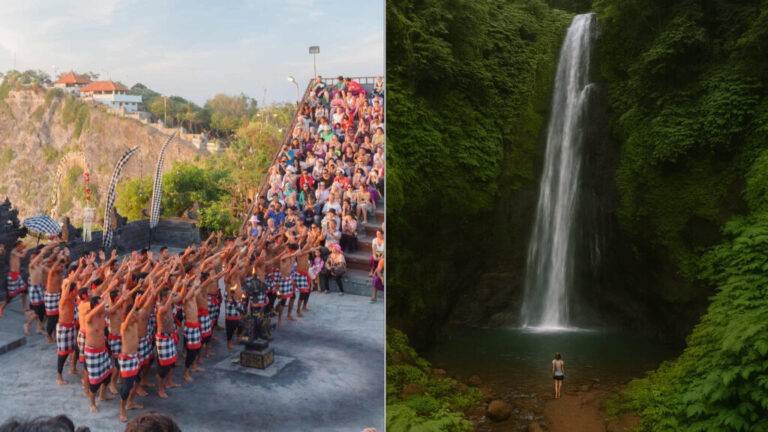

Standing on the edge of a dramatic limestone cliff, with the Indian Ocean crashing hundreds of meters below, Uluwatu Temple feels less like a tourist attraction and more like a place where nature and spirituality collide. Even seasoned Bali travelers often pause here—not just for photos, but for the quiet awe that settles in when sea wind, incense, and ancient stone meet.
An Uluwatu Temple tour is not only about ticking off one of Bali’s most famous landmarks. It’s about understanding why this temple has guarded the island’s southern coast for centuries, why locals still come to pray, and why sunset here feels different from anywhere else in Bali.
What Is Uluwatu Temple?
Uluwatu Temple, locally known as Pura Luhur Uluwatu, is one of Bali’s six key spiritual pillars, believed to protect the island from negative forces coming from the sea. Perched approximately 70 meters above the ocean, it is both a sacred site and one of Bali’s most iconic viewpoints.
Unlike inland temples surrounded by rice fields or jungle, Uluwatu’s power comes from its location. The vast ocean below symbolizes balance and purification in Balinese Hindu belief, making this temple especially significant for spiritual ceremonies.
Quick facts:
-
Location: Pecatu, South Kuta, Bali
-
Built in: 11th century
-
Function: Sea temple (Sad Kahyangan)
-
Best known for: Cliff views & Kecak fire dance
The History and Spiritual Meaning of Uluwatu Temple
The temple’s origins are linked to Mpu Kuturan, a revered priest who helped shape Balinese Hinduism. Later, the temple was expanded by Dang Hyang Nirartha, one of Bali’s most influential spiritual figures, who is said to have attained enlightenment here.
Uluwatu is dedicated to Dewa Rudra, a manifestation of Shiva associated with wind, storms, and cosmic balance. This explains the temple’s raw energy—often felt strongest in the late afternoon when winds rise and waves grow louder.
Visitors should remember: while Uluwatu is famous on Instagram, it remains an active place of worship. Ceremonies still take place regularly, and some areas are restricted to worshippers only.
Uluwatu Temple Tour Experience: What to Expect
Walking the Cliff Path
The main visitor path loops along the cliff edge, offering uninterrupted ocean views. Stone walls act as barriers, but the drop is real—comfortable shoes and awareness matter here.
Along the walk, you’ll encounter:
-
Panoramic ocean viewpoints
-
Temple gates with classic Balinese carvings
-
Shaded resting spots under frangipani trees
The Famous Monkeys (Yes, Be Prepared)
Uluwatu is home to a large population of long-tailed macaques. They are part of the ecosystem, but they’re also skilled opportunists.
Practical monkey tips:
-
Do not bring loose items (sunglasses, hats, phones)
-
Keep bags zipped
-
Avoid eye contact if a monkey approaches
-
If something is taken, local staff can help negotiate
Uluwatu Temple Dress Code and Entrance Rules
Because this is a sacred site, modest dress is required.
Dress code essentials:
-
Sarong covering legs (provided at entrance)
-
Sash around the waist
-
No bare shoulders for ceremonial areas
Women who are menstruating are traditionally advised not to enter temple grounds, following Balinese Hindu customs.
Entrance fee (subject to change):
-
Adults: IDR 50,000
-
Children: IDR 30,000
Best Time to Visit Uluwatu Temple
Sunset: The Most Popular (and Busiest)
Sunset is the reason most people come. The sky shifts from gold to deep orange, with silhouettes of cliffs and temple towers creating one of Bali’s most dramatic scenes.
Pros:
-
Stunning light for photos
-
Cooler temperatures
-
Kecak dance performances start
Cons:
-
Crowded paths
-
Limited quiet moments
Morning Visits: Calm and Underrated
If you prefer a more reflective experience, visit before noon.
Why morning works:
-
Fewer tourists
-
Softer light
-
Better chance to observe temple atmosphere
The Kecak Fire Dance at Uluwatu
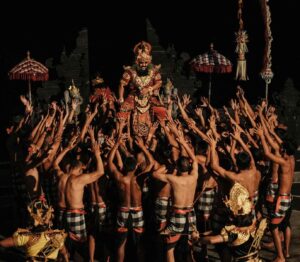
No Uluwatu Temple tour feels complete without the Kecak dance. Performed in an open-air amphitheater overlooking the ocean, it combines chanting, fire, and epic storytelling from the Ramayana.
What makes it special here:
-
Sunset backdrop
-
Ocean breeze replacing traditional instruments
-
Powerful vocal rhythm by dozens of male dancers
Showtime: Usually around 6:00 PM
Tip: Arrive early to secure good seating
How to Get to Uluwatu Temple
Uluwatu is located on the Bukit Peninsula, about:
-
45–60 minutes from Seminyak or Canggu
-
30 minutes from Jimbaran
-
50 minutes from Ubud
Public transport is extremely limited. Most travelers choose:
-
Private car with driver
-
Scooter (experienced riders only)
For flexible timing—especially if combining sunset and Kecak—a private driver is the most practical option. Many travelers use local resources like https://balibelin.com to arrange reliable transport and custom Bali sightseeing routes without rushing.
Suggested Uluwatu Temple Tour Itinerary
Half-Day (Afternoon to Evening):
-
Visit Padang Padang or Suluban Beach
-
Late afternoon walk at Uluwatu Temple
-
Sunset viewing
-
Kecak dance performance
-
Seafood dinner in Jimbaran Bay
This route works well and avoids unnecessary backtracking.
You can also combine Uluwatu with nearby highlights such as:
-
Melasti Beach
-
Garuda Wisnu Kencana Cultural Park
-
Jimbaran seafood cafés
Cultural Tips for a Respectful Visit
-
Speak softly near prayer areas
-
Do not climb temple structures
-
Avoid pointing feet toward shrines
-
Follow staff instructions during ceremonies
These small gestures go a long way in honoring local customs.
Internal Travel Resources
For travelers planning a smooth South Bali route, these guides may help:
-
Bali private driver services and custom routes
-
South Bali sightseeing itineraries
-
Cultural temple visits in Bali
A well-planned route saves time and energy, especially during peak hours.
FAQ
Is Uluwatu Temple worth visiting?
Yes. Its cliffside location, spiritual importance, and sunset views make it one of Bali’s most unique temple experiences.
How long should I spend at Uluwatu Temple?
Plan 1.5–2 hours, or longer if you attend the Kecak dance.
Are the monkeys dangerous?
They are not aggressive but can steal belongings. Awareness and simple precautions are enough.
Can children visit Uluwatu Temple?
Yes, but parents should supervise closely near cliffs and monkeys.
Is Uluwatu Temple open every day?
Yes, typically from morning until sunset, including holidays.
Conclusion
An Uluwatu Temple tour is more than a scenic stop—it’s a window into Bali’s spiritual relationship with the sea, cliffs, and unseen forces that shape daily life on the island. Whether you come for history, sunset, or cultural performance, the experience leaves a lasting impression when approached with curiosity and respect.
Plan your timing wisely, dress appropriately, and allow yourself to slow down. Uluwatu rewards travelers who do more than just look—it invites them to feel Bali.