When you arrive in Bali, you might quickly notice a curious pattern: many of the locals you meet seem to share similar names. From your helpful hotel staff to the friendly vendors at the market and even your private driver Bali, you’ll encounter a prevalence of Wayan, Made, Nyoman, and Ketut. This isn’t a coincidence, but rather a fascinating insight into Balinese culture. Understanding Balinese names and family structure is key to appreciating the island’s unique social fabric, and it adds a rich layer to your travel experience. As your Bali travel expert, I’m here to demystify this intriguing aspect of Balinese life.
The Simplicity (and Complexity) of Balinese Birth Order Names
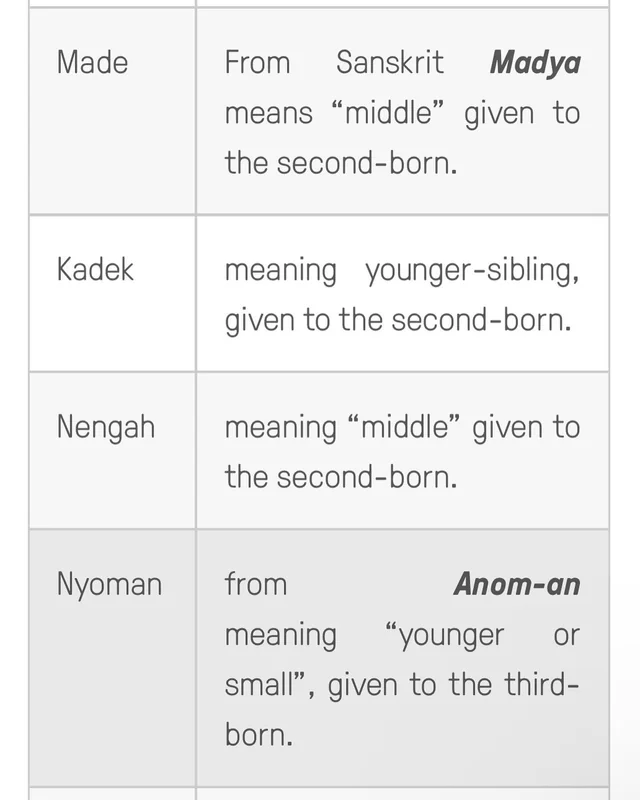
The most common Balinese naming system is based on birth order, regardless of gender. This applies to the first four children in a family. After the fourth child, the cycle simply repeats! Here’s the breakdown:
-
Wayan (or Putu/Gede): The first-born child.
-
Made (or Nengah): The second-born child.
-
Nyoman (or Komang): The third-born child.
-
Ketut: The fourth-born child.
So, if you meet a Made, you instantly know they are the second child in their family. This system creates an immediate sense of connection and identification within the community. It’s a beautiful example of how an ancient tradition simplifies social interaction while deeply embedding an individual within their lineage. This primary system is the cornerstone of understanding Balinese names and family structure.
Why a Bali Car Charter with Driver Enhances Cultural Immersion
Navigating the nuances of Balinese culture, including its naming conventions and intricate family ties, is much easier with local guidance. Opting for a Bali car charter with driver means you have a knowledgeable local by your side who can explain these traditions in real-time. Imagine asking your driver, “Are you a Wayan or a Made?” and then hearing the stories behind their name and family history.
Our local drivers at https://balibelin.com are not just skilled navigators; they are cultural ambassadors. They can share personal anecdotes and local insights that no guidebook can offer, making your journey from temple visits to village excursions truly enriching. This personal connection is a core benefit of a Bali private tour service.
Caste System and Additional Names
While the birth order names are universal, a deeper dive into understanding Balinese names and family structure reveals the influence of the caste system, Catur Warna. Although not as rigid as in some other cultures, it still exists and affects naming conventions, particularly for those belonging to higher castes:
-
Brahmana (Priests): Often use names like Ida Bagus (male) or Ida Ayu (female).
-
Satria (Nobles/Warriors): May use names such as Anak Agung, Cokorda, or Dewa.
-
Wesia (Merchants/Officials): Commonly use names like Gusti.
For the majority of Balinese (the Sudra caste), the birth order names are paramount. However, people also often add a personal name, or more commonly, are referred to by a nickname or the name of their first child (e.g., “Mekel Made” meaning “father of Made”). This combination adds another layer to the Balinese naming puzzle.
The Patrilineal Family Structure: A Pillar of Balinese Society
Balinese society is fundamentally patrilineal, meaning lineage and inheritance pass through the male line. This is a crucial aspect of understanding Balinese names and family structure. When a woman marries, she typically moves to her husband’s family compound and adopts her husband’s family lineage. Children then carry the birth order name according to their position in the new family.
Family compounds, known as pekarangan or banjar, are sprawling complexes where extended families live together. Each compound is a small village in itself, with multiple houses, a family temple, and communal spaces. Witnessing such a compound on a Bali day trip provides incredible insight into daily life. Your hire driver Bali can often point out these compounds and explain their significance as you pass by.
Real-Life Examples and Local Insights
Imagine you’re on a Bali daily tour visiting a rice paddy. Your local guide might introduce himself as “Made,” but everyone calls him “Bapak Kadek” (father of Kadek). This signifies his status as a father and connects him to his firstborn. These seemingly small details are rich with cultural meaning.
Another example: during a temple festival, you might see a family offering prayers. Your Bali tour package guide could explain how a specific family’s offerings are tied to their lineage, their birth order, and their connection to the temple. These are the kinds of authentic experiences that truly elevate your understanding of Balinese culture.
When you engage with locals, try to use their birth order name if you know it, or simply use “Bapak” (Mr.) or “Ibu” (Ms./Mrs.) followed by their name. It shows respect and an appreciation for their traditions.
Beyond the Name: The Power of Community and Ancestors
Beyond individual names, the Balinese family structure is deeply intertwined with ancestor worship and community life. Every family compound has a dedicated family temple, where offerings are made daily to honor ancestors and maintain harmony. This constant connection to past generations reinforces the importance of lineage and continuity, which is reflected in their naming system.
The banjar, or village community association, is another powerful social structure. It acts as a local government, responsible for everything from community events and ceremonies to maintaining infrastructure. Participation in the banjar is mandatory for Balinese men, reinforcing the communal bonds that are so vital to Balinese life. A good Bali tour service will often include visits to traditional villages where you can observe these structures in action.
Embark on a Deeper Cultural Journey with a Local Driver
By now, you have a much better grasp of understanding Balinese names and family structure. This knowledge will undoubtedly enrich your interactions and observations as you explore the island. Don’t just see Bali; understand it!
For an unforgettable and deeply immersive experience, consider booking a Bali private tour or a car charter with driver through balibelin.com. Our friendly, knowledgeable local drivers are eager to share their culture with you, taking you beyond the typical tourist spots to uncover the true heart of Bali. Let us help you create memories that go far beyond beautiful scenery – memories steeped in genuine cultural connection.