
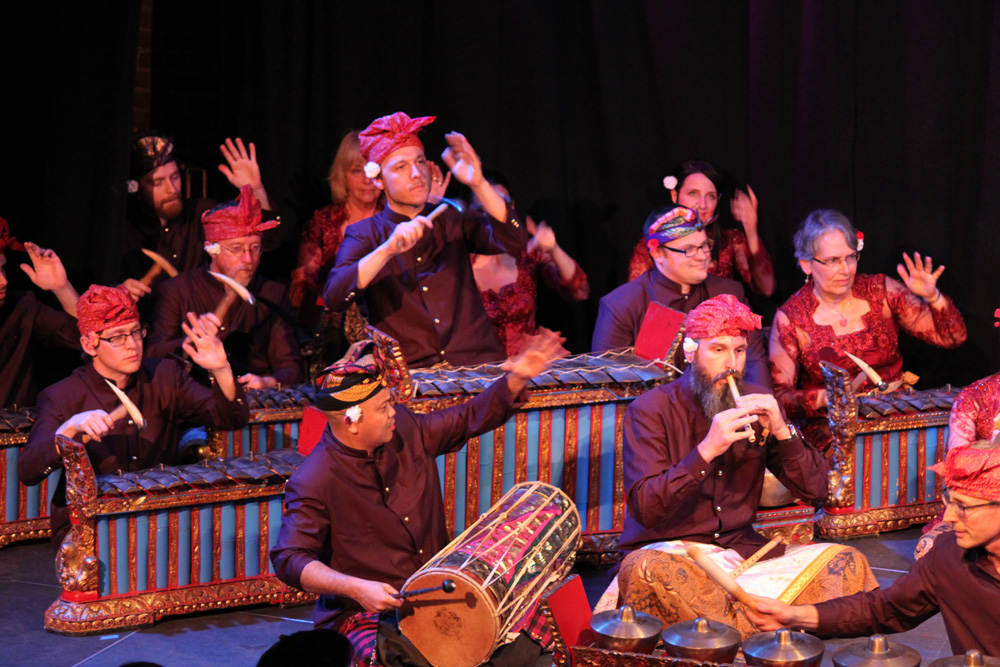
If you are planning a trip to the Island of the Gods, there is one sound that will follow you from the moment you land at the airport to the quietest corners of a mountain village. It is a shimmering, metallic, and deeply hypnotic rhythm that seems to pulse from the very earth itself. But what to expect when you hear gamelan music for the first time?
For many international visitors, the first encounter with a Balinese gamelan orchestra is nothing short of transformative. It is not just music; it is the heartbeat of Balinese culture, a sacred social bond, and a masterpiece of acoustic engineering. As a local travel expert, I always tell my guests that to understand Bali, you must first learn to listen to its bells, gongs, and drums.
The Shimmering Sound of the “Island of the Gods”
When you first hear the ensemble, the most striking feature is the “shimmer.” This isn’t an accident or a lack of tuning. In Balinese gamelan, instruments are built in pairs—one “inhale” and one “exhale.” One is tuned slightly higher than the other, creating a physical vibration in the air known as “ombak” or waves.
When you hear these instruments played together, the sound feels alive, as if the air around you is vibrating. This is exactly what to expect when you hear gamelan music in a temple or during a traditional performance: a literal physical sensation of sound that resonates in your chest.
Why You Need a Bali Private Tour Service to Find the Best Spots
While you might hear a faint echo of gamelan while walking through the streets of Ubud, the most authentic experiences are often tucked away in village banjars (community halls) or hidden temples. This is where a Bali private tour service becomes invaluable.
Instead of wandering aimlessly, a professional car hire with driver in Bali allows you to navigate the island’s narrow backroads to find local rehearsals. At https://balibelin.com, we specialize in connecting travelers with these authentic moments. Our local drivers know exactly when the village youths are practicing for an upcoming festival, giving you a front-row seat to a private rehearsal that most tourists never see.
Understanding the Instruments: More Than Just Gongs
The word “gamelan” comes from the Javanese word gamel, meaning to strike or hammer. Most of the instruments are made of hand-forged bronze or bamboo. Here is a quick guide on what to expect when you hear gamelan music in terms of its “orchestra” members:
-
The Gangsa: These are the metallophones with bronze bars. They carry the lightning-fast, interlocking melodies.
-
The Gong Ageng: The large, deep-hanging gong. It marks the end of a musical cycle and is considered the most sacred part of the set.
-
The Kendang: These are the horizontal drums. The lead drummer acts like a conductor, using rhythmic cues to tell the rest of the group when to speed up, slow down, or stop.
-
The Suling: A bamboo flute that adds a haunting, ethereal melody over the percussive bronze.
The Thrill of Kotekan: Musical Teamwork
One of the most mind-blowing things to witness during a Bali day trip is the technique called kotekan. This is where two musicians play different, extremely fast parts that interlock perfectly to create one single, complex melody.
It is a beautiful metaphor for Balinese life: Gotong Royong, or mutual cooperation. No single musician is the “star.” The beauty comes from the collective effort. This high-energy, syncopated style is a hallmark of the Gong Kebyar style, which is the most popular form of gamelan you will encounter today.
How to Experience Gamelan Like a Local
If you want to move beyond the tourist stages, consider booking a Bali tour package that focuses on “Living Culture.” With a dedicated private driver Bali, you can visit a Gong-smith in the village of Sawan or Blahbatuh to see how these massive bronze instruments are forged in fire.
Many visitors prefer a Bali daily tour that ends with a sunset performance at Uluwatu or the Ubud Palace. However, if you hire driver Bali, you have the flexibility to stop at a small village cremation ceremony (Ngaben) or a temple anniversary (Odalan). In these sacred settings, the gamelan isn’t just entertainment—it’s a bridge to the spirit world.
Practical Tips for Your Cultural Journey
-
Dress Respectfully: If you are heading to a temple to hear gamelan, ensure you are wearing a sarong and sash.
-
Don’t Step Over the Instruments: In Bali, the gamelan is sacred. Stepping over an instrument is considered very disrespectful to the spirits residing within.
-
Ask Your Driver: Your Bali car hire with driver is your best cultural ambassador. Ask them about the “Gamelan Beleganjur”—the walking percussion used in street processions. It’s loud, energetic, and unforgettable!
Plan Your Musical Adventure in Bali Today!
Now that you know what to expect when you hear gamelan music, it’s time to experience the “Shimmer of Bali” for yourself. Don’t settle for a generic bus tour where you are just another number.
Book a Bali private tour or a Bali car charter with driver to explore the island at your own pace. Whether you want to witness a grand temple festival or sit quietly in a village square as the sunset rehearsal begins, we are here to make it happen.